Blog
Common mistakes new insurance agents make when finding clients
Learn how to avoid common mistakes new insurance agents make, find clients, explain coverage clearly, follow up consistently, and build a reliable pipeline.

Client shortages usually point to a process problem, not a lack of potential customers. The common mistakes new insurance agents make include relying on one prospect source, rushing product explanations, and letting follow-up slip. A steady pipeline starts with consistent outreach, clear conversations, and accurate applications.
It’s frustrating when effort doesn’t lead to appointments or sales. But making more calls alone won’t fix unclear communication or weak follow-through. This guide explains how to find prospects, describe insurance products in plain language, build professional connections, and capture application details accurately. You’ll also learn how to organize follow-up and focus on meaningful conversations, so each step builds trust rather than creating friction.
Key Takeaways
- Ask focused questions, explain coverage in plain language, and set a clear follow-up date when a prospect needs more time.
- Build a routine for learning product and compliance requirements, and keep your client communications and records organized.
- Develop relationships with carrier representatives, local businesses, and prospects to create more than one path to new clients.
- Review application details carefully with clients so information reflects their circumstances accurately before submission.
1. Client communication and clear explanations
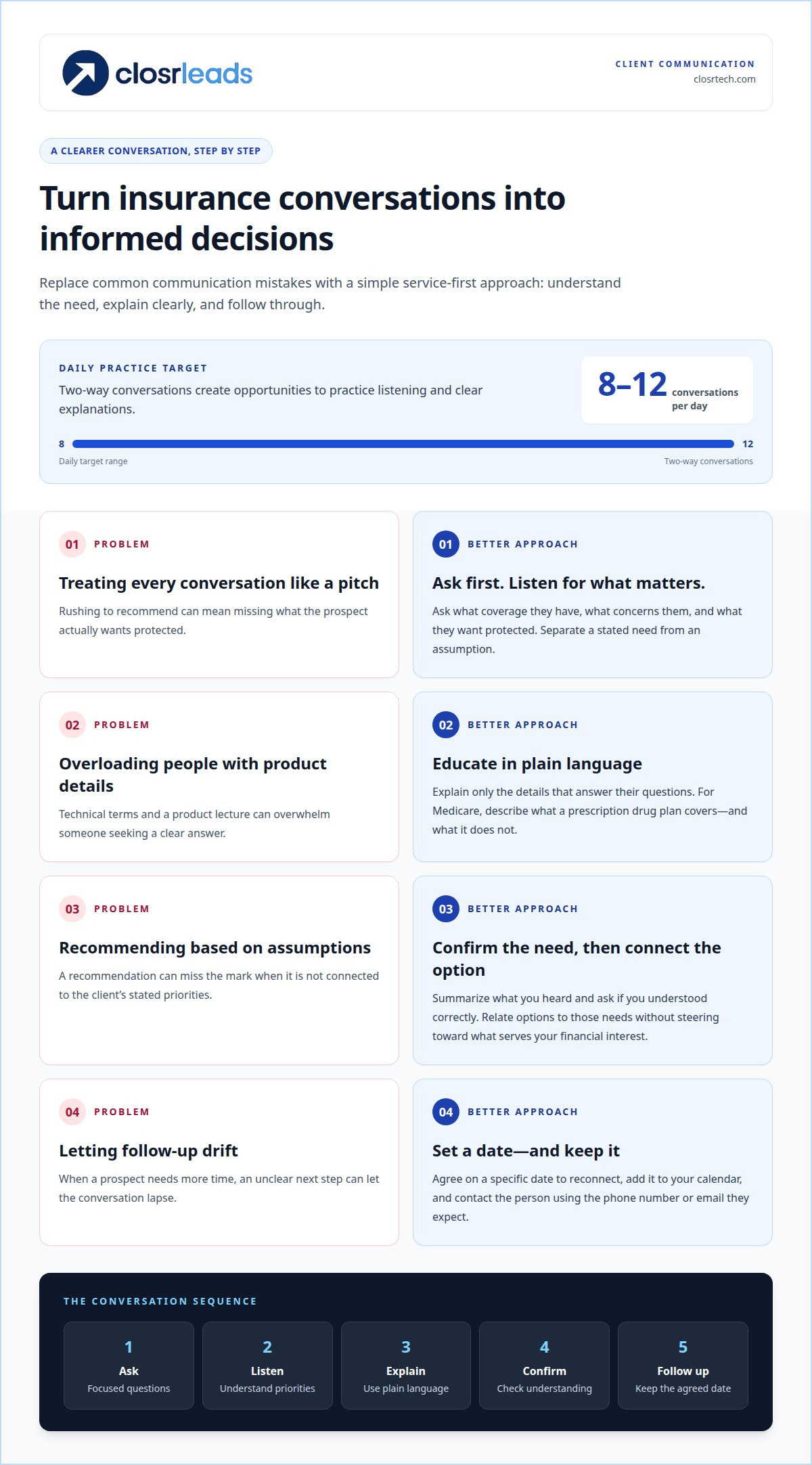
One of the common mistakes new insurance agents make is treating each conversation like a pitch. Start with questions, then let the prospect explain what matters. Ask what coverage they have, what concerns them, and what they want protected. Listen for the difference between a stated need and an assumption. A daily target of 8-12 two-way conversations creates opportunities to practice this approach. Independent agents can use each exchange to learn, not just to close.
Educate before recommending. When discussing Medicare, for example, explain in plain language what a prescription drug plan covers and what it doesn’t. Focus on the client’s priorities and describe relevant options without steering them toward a choice that serves your financial interest. Share only the details that answer their questions. A brief explanation of how coverage works can prevent technical terms from overwhelming someone. Clients need clear, useful information, not a product lecture.
Follow-up is part of client service, not an afterthought. Contact a lead promptly using the phone number or email the person expects. If a prospect needs time, agree on a specific date to reconnect and add it to your calendar. Then keep the appointment. Useful educational resources and meaningful conversations help build relationships beyond the first sale. For Medicare clients, keep them informed about carrier rate changes, new plans, or leadership changes that could affect them.
Before recommending a product, summarize what you heard and ask whether you understood correctly. Then relate the recommendation to the client’s stated needs, using numbers only when they help clarify the choice. If prescription costs are their main concern, for example, explain drug coverage options simply before discussing other features. Invite questions and check their understanding. This turns a sales exchange into an informed decision and gives new agents a repeatable process from the start.
Meeting state licensing and compliance obligations
Common compliance and ethical violations include misrepresenting coverage, skipping disclosures, mishandling policyholder information, and submitting incomplete records. Selling insurance without the license required for that type of insurance in your state is another serious error.
Before approaching prospects, confirm that your license and any required certifications match the insurance you plan to sell. Agency owners should verify that each agent meets those requirements, too. Learn your obligations around disclosures, client information, and recordkeeping. A practical first step is to create a checklist for each product type and review it before discussing coverage or submitting an application. This makes compliance a routine part of your workflow, not a last-minute scramble.
Medicare requires continued learning beyond exam preparation. Products and rules evolve, so schedule product and compliance training as part of your regular education. CMS monitors Medicare agents to protect older adults, and agents must follow CMS compliance rules and carrier-specific protocols. Learn the procedures for each carrier you represent. Keep current training materials accessible and record when you complete required learning. This preparation supports informed discussions and helps prevent outdated explanations.
Documentation matters. Keep organized records of client policies, claims, and communications so decisions and follow-up are clear. For example, record the information a client provided, the options you explained, and any questions that remain open. Use a consistent process to store notes and protect policyholder information. If a compliance question arises, document it and seek guidance through the appropriate channel before proceeding. Clear records support transparency and help identify process gaps early.
Product knowledge and compliance go hand in hand. Before presenting a Medicare plan, learn its key features, limitations, and carrier procedures. Don’t rely only on a brief sales summary; training helps you explain relevant details accurately. Medicare agents who violate compliance rules may face fines, license revocation, or jail time. Treat each product update as a prompt to review your materials and discussion process. This discipline protects clients and gives your agency a stronger foundation.
3. Networking with carriers, local businesses, and prospects
A clear agency business plan gives networking a direction. Define your target market, revenue goals, marketing approach, and operating strategy before choosing an insurance niche. For example, an agent focused on small businesses can build relationships with local business owners and learn which coverage questions they commonly raise. A focused plan also helps you develop carrier relationships that support your chosen products. Set a daily goal of 25-40 outbound contacts, then track which conversations create useful prospects.
Networking takes more than collecting contacts. Introduce yourself to carrier representatives, learn their product procedures, and find out where to access submission forms. Attend community events and speak with small business owners about their needs without forcing a pitch. LinkedIn, Facebook, and Instagram can help you share useful insurance information and connect with prospects. Purchased leads can add another source of prospects, while referrals and local connections build additional sources over time.
What startup costs should new agents plan for? Budget for licensing and education, business tools, marketing, and ongoing operating expenses. The mix depends on your agency model, niche, and the resources needed to serve clients. Track expenses from the start, separate business and personal transactions, and review income and spending regularly. Set aside part of available profits for operating costs, future growth, and unexpected needs.
How do commissions, fees, and chargebacks work for new agents? Commission schedules and fees depend on the applicable carrier or agency agreement. Read the written terms for payment timing, renewal commissions, and chargeback conditions, including when a commission may be reversed.
Keep organized accounting records and schedule recurring business reviews. Clear records make it easier to see which outreach channels generate prospects and which expenses support growth. If you use a vehicle for business, disclose that use to your auto insurance company. Assuming it is for personal use can create problems if the vehicle is involved in business activity. Include this disclosure in your onboarding checklist, along with business records and carrier procedures.
If you need another source of prospects for your chosen niche, explore insurance lead options that align with your outreach plan.
4. Providing accurate information on insurance applications
Misquoting coverage can leave clients expecting protection their policy doesn’t provide. Inaccurate promises can undermine trust, prompt complaints, and lead to disputes when a claim occurs. Explain coverage using the policy’s terms, not assumptions or a rushed summary.
Build a consistent application review process. Ask the applicant for each detail, record their answers accurately, and read key entries back before submission. If an answer is unclear, pause and ask a follow-up question instead of filling in a blank yourself. For example, confirm who regularly drives a vehicle rather than assuming the listed policyholder is the only driver. Note any clarifications so later conversations match the submitted information.
Omitting details can have serious consequences. Leaving a young driver off an auto policy can lead the insurer to deny a claim or terminate the policy. Anyone who uses a vehicle for business should disclose that use to their auto insurance company. Ask directly about household drivers and vehicle use, then record the answers as provided. Don’t change an applicant’s response to make a quote seem more competitive.
Moving too quickly can turn a small misunderstanding into an application error. Separate the quote discussion from fact-gathering. First, collect the information required for the application. Then review names, addresses, drivers, business use, and other relevant responses with the applicant. Correct errors before submission and explain why complete answers matter. Never promise a specific outcome based on information that hasn’t been verified.
Before submitting, compare the application with your notes and resolve any inconsistent answers with the applicant. This final review helps prevent avoidable errors and gives both parties a clear record of what was provided. Keep prospecting separate from verification: use Veteran Insurance Leads to find prospects, then confirm each applicant’s details directly before submission.
ClosrLeads: Final Expense Leads
ClosrLeads offers Final Expense Leads for agents building a prospect pipeline in that niche. When referrals and local outreach aren’t enough to keep prospecting consistent, leads can provide another source of potential clients. ClosrLeads also offers Veteran Insurance Leads and IUL Leads for agents focused on those markets.
ClosrLeads offers real-time and aged leads, all OTP phone-verified and TCPA-compliant, with documented consent records. Real-time leads are delivered to your CRM when generated, and the built-in dialer helps you work purchased leads. Choose CRM webhook or CSV - your choice. Keep confirming each prospect’s needs and application details directly.
Contact ClosrLeads to discuss its lead options.
Build a stronger routine from your next conversation
Turn good intentions into a repeatable work rhythm. Set aside time to review your pipeline, decide which prospects need attention, and prepare a useful next step for each conversation. Track what you learn. If an approach leads to unclear discussions or incomplete information, adjust the process before repeating it. Progress comes from deliberate improvements, not from trying to fix every part of your business at once.
The common mistakes new insurance agents make can be harder to overcome when prospecting is inconsistent. A reliable flow of opportunities gives you more time for thoughtful conversations and careful follow-through. Choose the market you want to build in, then align your outreach with that goal. Learn from each interaction and refine your routine as your experience grows.
When you’re ready to strengthen your prospect pipeline, explore prospecting options with ClosrLeads. Keep moving forward, one focused conversation at a time.
Frequently Asked Questions
What if I can’t find enough clients?
If your pipeline is thin, broaden the ways prospects can discover and meet you. Choose a clear audience, then pair referral requests with useful educational posts and planned outreach to organizations. Track each source separately in a simple CRM or spreadsheet. After several weeks, compare which sources lead to real conversations, then focus more effort on those channels instead of increasing activity blindly.
What if I don’t really understand the products?
If a product still feels unclear, pause before presenting it. Build a one-page comparison from current carrier materials, separating eligibility, benefits, limitations, and application questions. Practice explaining a sample scenario in plain language, including what the policy doesn’t cover. Ask a knowledgeable supervisor or carrier contact about unresolved points. Return to the client once you can explain the tradeoffs accurately.
What if I fail in my first year?
A difficult first year can be a reason to reassess your approach, not a verdict on your ability. Review your first 90 days: identify where prospects stopped progressing, which activities led to appointments, and where follow-up broke down. Choose one process to improve, then track it consistently. Discuss persistent gaps with a trusted mentor or agency manager and set a practical next-step plan.
What are the most common mistakes new insurance agents make?
The common mistakes new insurance agents make often start with weak business routines: pursuing an unclear audience, tracking activity without measuring qualified opportunities, or failing to review the pipeline regularly. Diagnose the problem before changing everything. Look at where prospects stall, which questions keep coming up, and which parts of your process lack a clear owner. Fix the weakest step first, then assess the result.
What licensing and continuing education requirements do new insurance agents often overlook in the U.S.?
Agents can overlook whether their license and any required certifications match the insurance types they sell in each state. Continuing education and product learning also need attention as products and rules evolve. Medicare agents should account for CMS compliance rules and carrier-specific protocols. Keep a calendar of license-related deadlines, education, and training, then organize completion records so they’re easy to find when needed.
How can new agents avoid errors when assessing client needs and recommending coverage?
Use a consistent fact-finding worksheet before comparing coverage. Ask what the client wants to protect, what coverage they already have, and which tradeoffs matter most. A client focused on family protection, for example, may have different priorities from someone seeking coverage for a business obligation. Summarize the goal, explain why an option fits, and invite the client to correct any misunderstanding before moving forward.