Blog
Daily Habits of Successful Insurance Agents for Productive Work
Discover the daily habits of successful insurance agents, from focused prospecting and follow-up to clear communication, practical goals, and regular reviews.

Productivity doesn’t come from squeezing more into every hour. The daily habits of successful insurance agents center on planned prospecting, consistent follow-up, clear client communication, and regular progress reviews. A steady routine keeps essential work moving while leaving room to respond to clients’ needs.
That structure matters. Calls, emails, and administrative tasks can push prospecting aside, while follow-ups are easy to miss without a reliable system. Building trust takes more than making a sale: it means listening, offering useful recommendations, and following through.
This guide covers practical routines you can use: scheduling focused work blocks, setting measurable goals, strengthening communication, and reviewing what’s working. You’ll also learn how simple cues and repeatable routines can make productive actions easier to sustain. The aim is a workday with clear priorities, stronger client relationships, and a consistent process for moving opportunities forward.
Key Takeaways
- Build a daily rhythm that protects time for prospecting, follow-up, client service, and focused learning.
- Use active listening and clear, thoughtful communication to uncover client needs and handle concerns.
- Set practical goals, block time for priority work, and review progress so you can adjust your approach.
- Pair a reliable cue with a repeatable routine and a small reward to make productive actions easier to sustain.
1. What Are the Best Daily Habits for Insurance Agents to Stay Productive?
Start with a written plan that protects time for prospecting, client calls, sales, and relationship maintenance. Use a consistent system to move conversations forward after an initial discussion or sale. Leave room for urgent client needs, but don’t let routine tasks displace prospecting. These daily habits of successful insurance agents link planned activity with dependable client care.
Make learning part of your career, not an occasional task. Set aside time each week for professional development, then study a product or market question raised in a recent client conversation. Insurance products and sales software can change frequently, so regular learning helps you explain options clearly. Turn a client question into a specific learning goal to build the daily habits of successful insurance agents.
A mentor can help you develop practical skills. Bring a specific challenge, such as a difficult objection or a stalled prospect, and ask how the mentor would respond. Practice that approach before your next call. You can also ask successful colleagues for feedback on your explanations. Their examples may show where your wording is unclear or where a client needs more time.
Independent and captive agents may organize product learning differently. Captive agents typically work within one carrier’s product and pricing structure, while independent agents can work across carriers’ products and pricing. For whole-of-market specialists such as leetonksmortgageguru.uk, this flexibility means continuously studying a diverse range of mortgage and protection options. That distinction affects which product details each agent needs to study before client conversations.
In daily sales and client communications, use approved materials, describe coverage accurately, respect client communication preferences, and follow applicable state requirements and carrier procedures. Keep clear records of conversations and next steps so follow-up stays organized.
To maintain productivity without burning out, alternate focused sales work with brief pauses and set a clear boundary between work and home hours. Keep some flexibility for demanding client needs, and make room for stress-management practices such as mindfulness. A sustainable routine supports consistent effort without turning every hour into a sales sprint.
2. Developing communication and problem-solving skills
Strong prospecting combines direct outreach with relationships built through networking. Share useful insurance insights on professional platforms, then follow up with people who engage. At industry events, ask which coverage questions attendees hear most. Community involvement can also create natural opportunities to listen and learn what people value. These methods help agents start relevant conversations instead of relying on a single channel.
Treat each client conversation as a discovery session. Ask what they want their coverage to protect, what concerns them, and what they already understand. Then pause and listen before recommending an option. If a client is worried about affordability, for example, clarify their priorities before explaining available choices. Describe coverage, pricing, and exclusions transparently. If an objection signals confusion, restate the relevant detail in plain language and invite the client to explain what remains unclear.
Digital communication works best when it fits the person and the conversation. Use email to recap discussed options and next steps; use a call when a complex question needs careful explanation. Social media can help agents reach people on channels where they interact with brands. Keep messages specific: a short note that refers to a client’s stated concern is more useful than a generic sales pitch.
Daily service habits strengthen relationships after the initial sale. Initiate contact rather than waiting for clients to reach out. Schedule policy reviews, answer questions clearly, and follow through on promised next steps. Established full-service teams like The Lewis Agency highlight how proactive policy check-ins ensure clients maintain comprehensive personal and commercial coverage as their needs evolve. After a conversation, record the client’s concern and the agreed action. A personal thank-you note can also show appreciation and keep communication human. Consistency gives clients a clear reason to return with questions and recommend you, building long-term earning opportunities through trust rather than pressure.
3. Goal setting, planning, and progress reviews
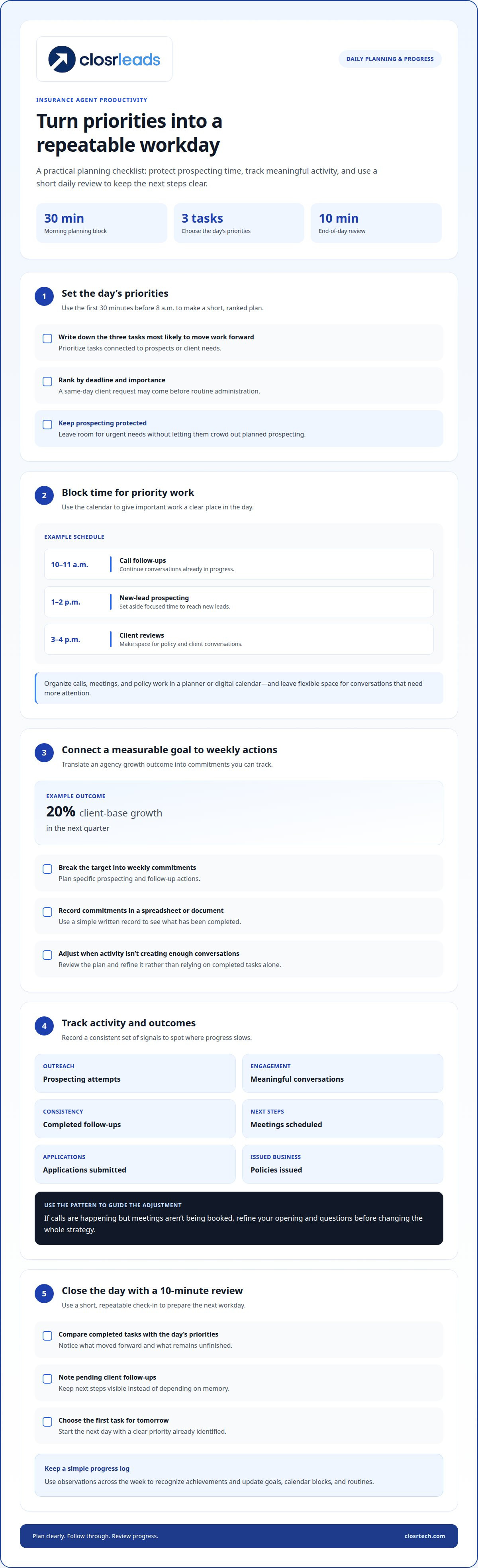
Start the day with a clear priority list. Reserve 30 minutes before 8 a.m. to identify the three tasks most likely to move prospects or client needs forward. Put deadlines and importance first. A same-day client request may outrank routine administration, but protect prospecting time so urgent work doesn’t crowd it out.
Build the calendar around specific work blocks. One example schedule assigns 10–11 a.m. to call follow-ups, 1–2 p.m. to new-lead prospecting, and 3–4 p.m. to client reviews. Use a planner or digital calendar to organize calls, meetings, and policy work. Leave flexible space for conversations that need more attention.
Set goals that connect daily actions to agency growth. For example, increasing the client base by 20% in the next quarter gives an agent a clear outcome to work toward. Break that target into weekly prospecting and follow-up commitments. Track those commitments in a spreadsheet or document, then adjust the plan when completed actions aren’t generating enough conversations.
Which sales metrics should insurance agents track daily? Record prospecting attempts, meaningful conversations, completed follow-ups, meetings scheduled, applications submitted, and policies issued. Reviewing both activity and outcomes helps reveal where progress slows. If calls are happening but meetings aren’t being booked, refine your opening and questions before changing the whole strategy.
Close the workday with a 10-minute review. Compare completed tasks with the day’s priorities, note pending client follow-ups, and choose the first task for tomorrow. A simple progress log reveals patterns across the week and helps agents recognize achievements. Use those observations to update goals, calendar blocks, and routines instead of relying on memory.
Consistent organization turns a plan into a working system. Keep your calendar, goal tracker, and client records aligned so next steps are easy to find. During each review, identify one task to prioritize, one deadline to protect, and one adjustment that could improve the next workday.
4. Habit formation through cues, routines, and rewards
A repeatable cue makes an important action easier to start. Set a daily 2 PM reminder to begin client follow-ups, then use the same opening step each day: review the contact record and choose the next useful question. Once the routine is complete, mark it done or take a brief break. That clear reward helps reinforce the behavior without relying on motivation alone.
Build a morning routine that prepares you for focused work. Before opening email or social media, review the day’s calendar, prepare call notes, and choose one product detail to refresh. For example, an agent discussing life coverage can revisit a policy feature clients often ask about. This brief learning step keeps product knowledge close at hand and gives the morning a clear start.
Use a timer when a task feels easy to delay. The Pomodoro technique uses 25-minute work periods, followed by a short break. Apply one period to preparing client conversations or reviewing policy information, then pause before the next task. Keep the target specific, such as completing follow-up notes for the calls already made. A defined finish point makes the routine easier to repeat.
Make the routine visible. Place a written cue beside your phone, calendar, or client-management resource. Link it to one action, such as opening the follow-up list, and choose a small reward for completing it. If the routine breaks, restart at the next cue rather than abandoning it for the day. Track which cues work and adjust those you repeatedly miss.
For a practical way to support prospecting habits, explore Veteran and Trucker insurance leads as a resource for scheduled outreach. Build the routine around prompt, attentive conversations, not simply the closing.
ClosrLeads
ClosrLeads supports consistent prospecting with real-time and aged insurance leads across multiple verticals. Its offerings include Final Expense, Veteran, IUL, Trucker, and Mortgage Protection Leads, helping agents focus outreach on the markets they serve. All leads are OTP phone-verified, and the Built-In Dialer delivers leads directly to users’ CRM systems for immediate follow-up.
Use these tools when your schedule is organized but you need a steady flow of prospects to work. They support outreach, while productive conversations still depend on careful listening, clear explanations, and follow-through with each client. Contact ClosrLeads to discuss your prospecting needs.
Put Your Next Prospecting Routine in Motion
Choose one habit to strengthen this week, then make it easy to repeat. A consistent process gives you more room to focus on useful conversations instead of chasing tasks. The daily habits of successful insurance agents aren’t a fixed script; they’re a working rhythm you refine as you learn what helps clients make informed decisions.
When you’re ready to support that rhythm with prospects in the markets you serve, ClosrLeads offers Final Expense Leads, Veteran Insurance Leads, and IUL Leads. These options can connect planned outreach with your business focus, while your listening, follow-through, and client care shape each conversation.
Take the next step at your pace. Contact ClosrLeads to get started and discuss how lead options can fit your prospecting routine. Keep building one deliberate habit at a time, and carry that momentum into your next client conversation.
Frequently Asked Questions
What Are the Best Daily Habits for Insurance Agents to Stay Productive?
Protect time for revenue-generating work and make each client interaction purposeful. Before a call, review the prospect’s stated concern and decide what information could help them make a clear choice. Afterward, record the agreed next step. This simple preparation-and-record routine reduces repeated questions and helps you move smoothly between prospect conversations, service requests, and policy discussions.
How Can Independent Agents Manage Their Time More Effectively?
Independent agents can organize their workload by separating client-facing work from administrative tasks. Group similar activities, such as preparing policy comparisons or updating records, to reduce task switching. Leave open calendar space for unscheduled client issues, and set a clear stopping point for administrative work. Review your pipeline regularly so stalled opportunities get attention without taking over the day.
How Do I Build a Morning Routine That Sets Me Up for Success?
Choose a short sequence to repeat before client calls begin. For example, review the calendar, identify any prospect who needs a prepared answer, and arrange the materials for the first meeting. Keep distractions such as social media closed until those steps are complete. A routine should fit your actual workday, not depend on an elaborate preparation ritual.
How long does it take to become a successful insurance agent?
Success develops at different speeds because it depends on skill-building, consistent prospecting, product knowledge, and the ability to earn client trust. An agent who reviews missed opportunities and improves one part of the process can build momentum over time. Focus on what you can control, such as the quality of conversations and follow-through, rather than expecting a particular career milestone by a set date.
What daily habits do top-performing insurance agents follow?
Successful agents treat each prospect interaction as a chance to learn, not just an opportunity to close. After a conversation, note which question clarified the client’s priorities and which explanation caused confusion. Use those observations to improve the next discussion. They also maintain professional relationships by asking whether clients’ circumstances have changed before suggesting a policy adjustment.
How much time should insurance agents spend prospecting and following up each day?
Set aside enough time to keep new conversations entering the pipeline while completing promised follow-ups. The right balance depends on appointment volume, outstanding client requests, and how many prospects need another contact. If follow-ups are consistently overdue, reserve more protected time for them. If the pipeline is thinning, shift attention to prospecting, then reassess the balance as activity changes.