Blog
Insurance prospecting techniques that work to find clients
Discover insurance prospecting techniques that work, from referrals and networking to CRM follow-up and compliant calls, to build a steadier client pipeline.

The insurance prospecting techniques that work combine referrals, relevant lead sources, networking, useful online content, and consistent follow-up by phone and email. Use a customer relationship management (CRM) tool to organize prospects, prioritize outreach, and track next steps. Before calling, prepare a clear opener, anticipate common objections, and follow applicable consent and calling rules.
Prospecting can feel scattered when every channel competes for your time. A focused approach helps you build a steadier pipeline without relying on a single source. This article covers practical ways to find and nurture prospects, from combining lead sources and asking for specific referrals to building trust in communities and online. You’ll also learn how to organize follow-up, make purposeful calls, and keep outreach compliant. The goal is to make prospecting repeatable, with relevant conversations instead of random activity.
Key Takeaways
- Combine targeted lead sources, referrals, and useful content so prospecting doesn’t depend on one channel.
- Build referral relationships with professionals who serve the same communities, and make referral requests specific.
- Earn trust by engaging with local and online communities before pitching, then follow up with a clear, relevant message.
- Prepare a focused call opener and objection responses, and account for Do Not Call and consent requirements in your outreach.
1. Combining lead-generation methods
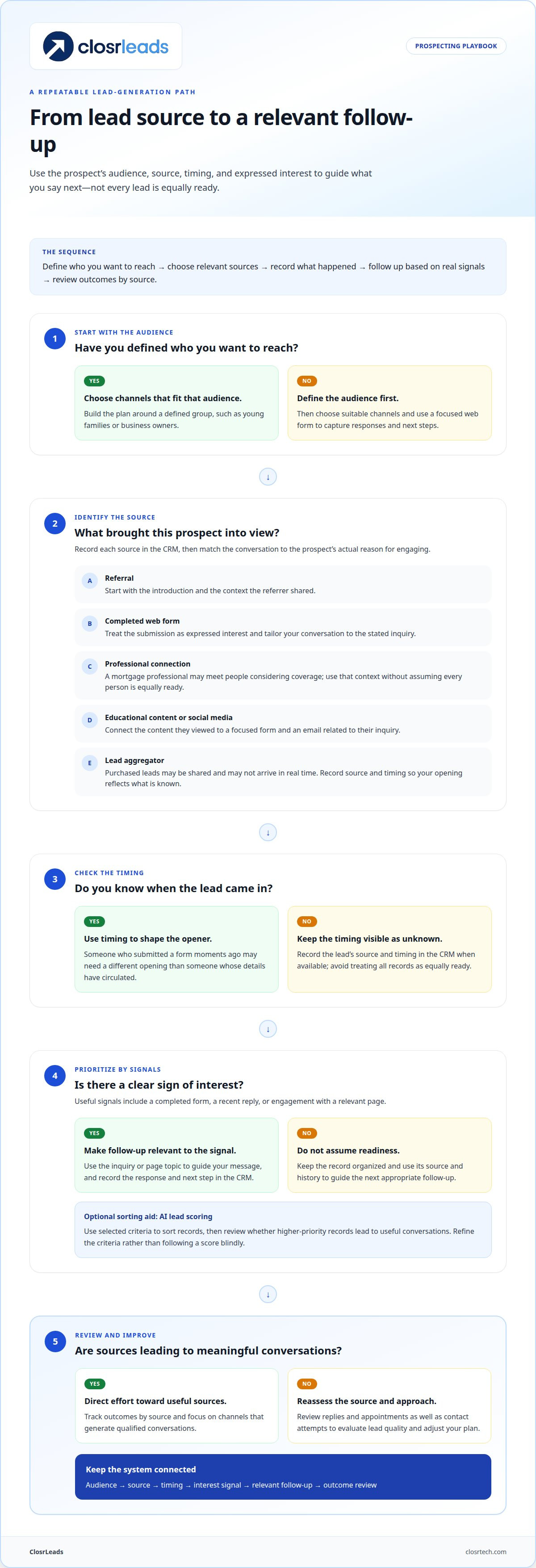
Among insurance prospecting techniques that work, combining relevant sources can help you identify prospects with a clearer reason to talk. A referral starts with an introduction, a completed web form signals expressed interest, and a mortgage professional may encounter people considering coverage. Match your conversation to the prospect’s stated interest. Track outcomes by source to see which approaches lead to meaningful conversations, rather than relying on a single channel.
Build your plan around a defined audience, such as young families or business owners. Choose suitable channels, use a focused web form, and record responses and next steps in your CRM. Review outcomes by source and direct effort toward channels that generate qualified conversations. This creates a practical sequence from identifying an audience to following up, without treating every prospect as equally ready.
Lead aggregators can add prospects, but purchased leads are often shared and may not arrive in real time. Record each lead’s source and timing in the CRM. A person who submitted a form moments ago may need a different opening than someone whose details have circulated. Track replies and appointments as well as contact attempts to assess lead quality.
Use CRM records to organize follow-up around clear signals, such as a completed form, a recent reply, or engagement with a relevant page. For professionals exploring automated client acquisition, tools like thefraction.com offer AI-driven lead generation systems to help streamline outreach. AI lead scoring can also help sort records using selected criteria. Review whether higher-priority records lead to useful conversations, then refine those criteria. Treat insurance prospecting techniques that work as a system to evaluate, not a fixed score to follow blindly.
Social media and educational content can attract inbound interest. Share an explainer about mortgage protection, direct interested readers to a focused web form, and follow up by email with information related to their inquiry. This sequence connects content engagement to a direct next step. Keep the message relevant to the topic they viewed, and record their response so subsequent outreach reflects their actual interest.
2. Offline networking and referral partners
Professional and community relationships can put insurance conversations in context. Attend relevant events and groups, and focus on listening before introducing your services. For example, an agent might meet families through a parenting group or connect with veterans through an association. These prospecting strategies work best when you engage consistently, contribute useful information, and give people a clear reason to remember you.
Build a referral network with professionals who serve related needs. Mortgage professionals and realtors meet people making housing decisions, tax professionals work with clients managing financial changes, and public adjusting specialists such as donnauro.com support residential and commercial property owners navigating claims. Explain the type of people you help, then learn about the clients your contacts serve. Keep the relationship useful in both directions, and follow up after introductions so your contact knows the referral received attention.
A client referral program can make requests easier to act on. Ask satisfied clients for introductions when a relevant conversation arises, rather than relying on a vague request to “send someone.” For example, invite them to think of new homeowners, recently self-employed people, or people approaching Medicare eligibility. These prompts give clients a concrete way to identify someone who may welcome a conversation.
Make referrals personal and straightforward. Ask permission before contacting an introduction, and respect anyone who declines. If considering compensation for referrals, state rules vary, so consult your state insurance department’s guidelines before offering it. You can also host a financial wellness workshop with a community organization or small business. Choose a focused topic, such as how families think about financial protection, and leave time for questions. These steps can build trust, strengthen relationships, and support a steadier prospecting process.
3. Building client relationships and trust
Trust begins with a useful first conversation, not a fast pitch. Ask what prompted someone’s interest, what concerns matter most, and what they already understand about coverage. Listen closely, then explain relevant options in plain language. For a small business owner, that could mean clarifying how personal priorities differ from business concerns. Understanding the prospect’s situation helps you make the conversation relevant and build credibility through practical answers.
Your online presence should reinforce the same clear, dependable approach. Keep professional profiles accurate, describe your role consistently, and share educational content where prospects can find it. A short guide to common coverage considerations can demonstrate your knowledge before a sales conversation begins. Review public posts and profile details regularly, since conflicting information can weaken the confidence your conversations build.
Online groups and forums offer another way to earn attention. Join communities relevant to homeowners, new parents, or small business owners, then answer questions without turning every exchange into a pitch. For example, explain a general insurance term when someone asks about it, and invite a private conversation only when appropriate. Consistent, useful participation helps people see the person behind the sales message and makes later contact feel more familiar.
After a prospect responds, follow up promptly. Explain what you offer, who you help, and what the next conversation will cover. If someone asks how to protect a household, send a concise explanation tailored to that interest instead of a generic sales message. Keep the conversation moving with relevant communication, not repeated pressure. Insurance broker Adam Frugoli says building client trust can take years. Make each interaction count: be accurate, respect the person’s pace, and provide the information you promised.
4. Cold calling and calling compliance
What scripts and outreach messages work for insurance prospecting? Use a brief opener that earns attention without creating tension, then ask one focused question. For example: “Hi, I’m calling to discuss life insurance options. Is reviewing coverage something you’re considering?” Adapt your wording to the prospect’s situation, then listen before explaining your offer. Prepare thoughtful responses to common objections, such as “I already have coverage” or “I’m not interested.”
Make each contact relevant. Target prospects around a clear need, and use details they provided rather than guessing. If someone requested information, acknowledge that request and explain the next step in plain language. A follow-up sequence can combine a phone call, voicemail, and email. One suggested rhythm is a first call the same day or within 24 hours, another on day 5 to 7, and an email on day 10 to 14.
What are common insurance prospecting mistakes, risks, and ways to avoid them? Avoid vague scripts, repeated messages with no new value, and calls that ignore a prospect’s stated preferences. The Federal Trade Commission’s Do Not Call Registry applies to most consumer calls in the United States. The Telephone Consumer Protection Act governs automated calls and text messages, according to the Federal Communications Commission. Confirm required consent before texting, and respect opt-out requests.
Track call outcomes in your CRM, including the date, channel, response, and agreed next step. This makes follow-up more deliberate and helps identify which digital, LinkedIn, or networking sources lead to useful conversations. Review the results, refine your targeting, and rehearse responses before your next calling block. For a more organized prospecting workflow, streamline lead follow-up alongside your outreach.
ClosrLeads
ClosrLeads helps insurance agents add focused lead sources to the prospecting methods they already use. Choose from Final Expense, Veteran Insurance, IUL, Trucker Insurance, or Mortgage Protection Leads to support the audience and product focus of your pipeline. OTP phone-verified leads and a built-in dialer help organize outreach and follow-up, while leads can be delivered into your CRM.
Turn to ClosrLeads when referrals and networking need support from a structured source of prospects, or when you want to focus outreach on a specific insurance vertical. Leads can complement relationship-building and follow-up, not replace relevant conversations or compliant calling practices.
Explore ClosrLeads’ lead sources and built-in dialer to support your prospecting process.
Put your next prospecting move into action
The insurance prospecting techniques that work are the ones you can apply consistently, measure, and refine around the people you want to serve. Choose one part of your process to strengthen next. You might sharpen your outreach, improve how you track responses, or add a lead source that fits your focus. Then follow through. A well-managed prospecting process turns each opportunity into a clear next conversation.
ClosrLeads offers Final Expense Leads, Veteran Insurance Leads, and IUL Leads for agents building their pipeline in those areas. If you’re considering lead support for your prospecting process, contact ClosrLeads to discuss your leads.
Keep your approach focused, your communication relevant, and your next step clear. Steady, thoughtful action gives you a stronger foundation for building client relationships and growing with confidence.
Frequently Asked Questions
What are the most common ways to do insurance prospecting?
Agents commonly combine purchased leads or referrals with community outreach, educational content, and direct follow-up. Choose methods that fit your audience: a life insurance agent might connect with new parents, while an agent focused on business coverage might build relationships with business owners. Track which channel starts each conversation, then compare the quality of resulting appointments, not just the number of names collected.
How effective are referrals, networking, cold calling, and digital marketing for insurance agents?
Each channel works differently. Referrals begin with an introduction, networking builds familiarity over time, calls create direct conversations, and digital content can attract people researching coverage. Their value depends on audience fit, timing, and consistent execution. For example, an agent serving small businesses could pair networking with practical online content, then follow up with people who requested details.
What tools and CRM features help insurance agents prospect more effectively?
A CRM is most useful when it keeps prospect details, contact history, lead source, and next action together. Record product interest and preferred contact method, then set reminders so promising conversations don’t disappear in an inbox. Source tracking can show whether referrals, events, or online inquiries lead to qualified appointments. Keep records accurate, and limit access to information agents need for follow-up.
What are the best insurance prospecting techniques for Medicare, life, auto, and commercial insurance?
Match outreach to the coverage and audience. Life insurance agents can focus on household changes or financial priorities; agents discussing auto coverage can connect with drivers considering a policy review; agents serving businesses can build relationships with business owners. For Medicare products, AI-assisted outreach should comply with CMS marketing guidelines and applicable TPMO regulations. In every segment, tailor your opening to the prospect’s stated interest.
What TCPA, CAN-SPAM, and state rules apply to insurance prospecting calls, texts, and emails?
In the United States, the Telephone Consumer Protection Act governs automated calls and text messages, according to the Federal Communications Commission. The Federal Trade Commission’s Do Not Call Registry applies to most consumer calls. Email outreach also requires attention to applicable CAN-SPAM rules. State insurance departments may set varying guidelines for referral compensation, so keep calling, texting, email, and referral practices distinct in your compliance process.