Blog
Voicemail Scripts for Insurance Leads: Ideas for Every Call
Voicemail scripts for insurance leads help you reconnect with prospects, follow up professionally, and leave focused messages that make responding easy.

The final voicemail should make the next step clearer, not louder. Effective voicemail scripts for insurance leads identify you, explain why you’re calling, and make it easy for a prospect to respond. Keep each message focused, with a 20 to 30 second target that respects the listener’s time.
A missed call doesn’t have to end the conversation. The right voicemail can reconnect with someone who asked about coverage, explain why you’re calling, or close the loop after earlier attempts went unanswered. Aim to sound professional and relevant, not rehearsed or pushy.
Here are practical voicemail scripts for interested prospects, general follow-up, and final calls, along with tips for making each message your own. Use them as starting points to leave a concise voicemail with one clear next step.
Key Takeaways
- Reconnect with interested prospects by referencing their inquiry and making the next step easy to understand.
- Build outreach messages around a clear reason for calling, a relevant benefit, and a simple response option.
- Sound professional by identifying yourself, keeping the message focused, and sharing clear callback details.
- Use a final voicemail to close the loop respectfully and tell the prospect what to do if they want to continue.
1. Scripts for prospects who have already expressed interest
An interested prospect has already given you a useful opening: their inquiry. Use their name, the coverage they asked about, and one clear next step. For example, mention their request for a final expense quote and invite them to call back to discuss options. This makes the voicemail relevant without repeating a full sales pitch.
For a new lead, refer to the inquiry and explain why you’re calling. For an older lead, briefly reconnect and ask whether their coverage needs have changed. Don’t assume they remember an earlier conversation. Say, “You previously asked about coverage options, and I’m calling to see if you’d still like to discuss them.”
Segment prospects by the details they shared, not assumptions. Age may help you identify the product they asked about, while stated health needs or family circumstances can shape the coverage discussion. Interests matter, too: someone who requested information about an indexed universal life policy needs a different opening from someone asking about final expense coverage. Mention only details relevant to their inquiry.
Try this adaptable message: “Hi, [Name]. This is [Agent] with [Agency]. I’m calling about your request for [coverage type]. I can answer your questions and discuss options based on what you’re looking for. Call me at [number] when convenient. Again, this is [Agent] at [number].” Replace the brackets with accurate details before you leave the message.
Keep the message concise. State your name, agency, reason for calling, and callback number. Cut background details, technical terms, and multiple requests. Before leaving it, listen once and remove any sentence that doesn’t help the prospect understand why you’re calling or how to respond.
According to the Federal Communications Commission, outbound insurance calls are governed by the TCPA, the National Do Not Call Registry, and state-specific regulations. Follow applicable calling rules, respect removal requests, and make sure the prospect’s contact preferences are reflected before re-calling.
Prerecorded voicemail can involve separate TCPA and state-law requirements. Use it only when you have documented consent that covers the specific call and technology, and follow applicable restrictions on the number being contacted.
2. What are some good voicemail ideas for insurance agents?
A strong opening connects the call to a specific decision. Name the coverage type the prospect asked about, then offer a useful next step. “Hi, Jordan. I’m calling about your life insurance inquiry. I can walk through the options you wanted to understand. Call me back at [number].” This keeps the invitation clear and pressure-free.
For a life insurance inquiry, try: “Hi, [Name]. This is [Agent] with [Agency]. I’m calling about your life insurance request. I’d be glad to discuss coverage that fits your priorities and answer your questions. Call me at [number] when convenient.” Strong voicemail scripts for insurance leads stay relevant and avoid assumptions about health, budget, or family needs.
Social proof can add context to follow-up calls, but keep it accurate and relevant. Mention a client example only when the details are true and appropriate to share. Don’t promise similar savings or outcomes. Instead, explain your process: “I can walk you through how we review coverage options and answer your questions.” This gives the prospect a reason to keep listening.
For a lapsed-policy win-back call, acknowledge the earlier relationship without implying the policy is still active. Try: “Hi, [Name]. This is [Agent] with [Agency]. I’m calling to see whether you’d like to review your current protection needs. If you’re considering coverage again, I can explain possible next steps.”
A renewal call should invite a timely review. Begin about three months before the renewal date, then mention the upcoming renewal and offer to discuss any changed needs. Keep the message focused on one next step. For example: “I’m calling ahead of your renewal to see whether you’d like to review your coverage.”
After leaving a voicemail, a brief email can offer another way to respond, if permitted. Keep its purpose consistent with the message. Revisit your voicemail scripts for insurance leads when your outreach shifts between new inquiries, lapsed policies, and renewal conversations. Each situation needs a distinct, relevant opening.
Agents refining their calling workflow can explore insurance lead options to organize outreach around prospect inquiries.
3. What is a good script for a professional voicemail?
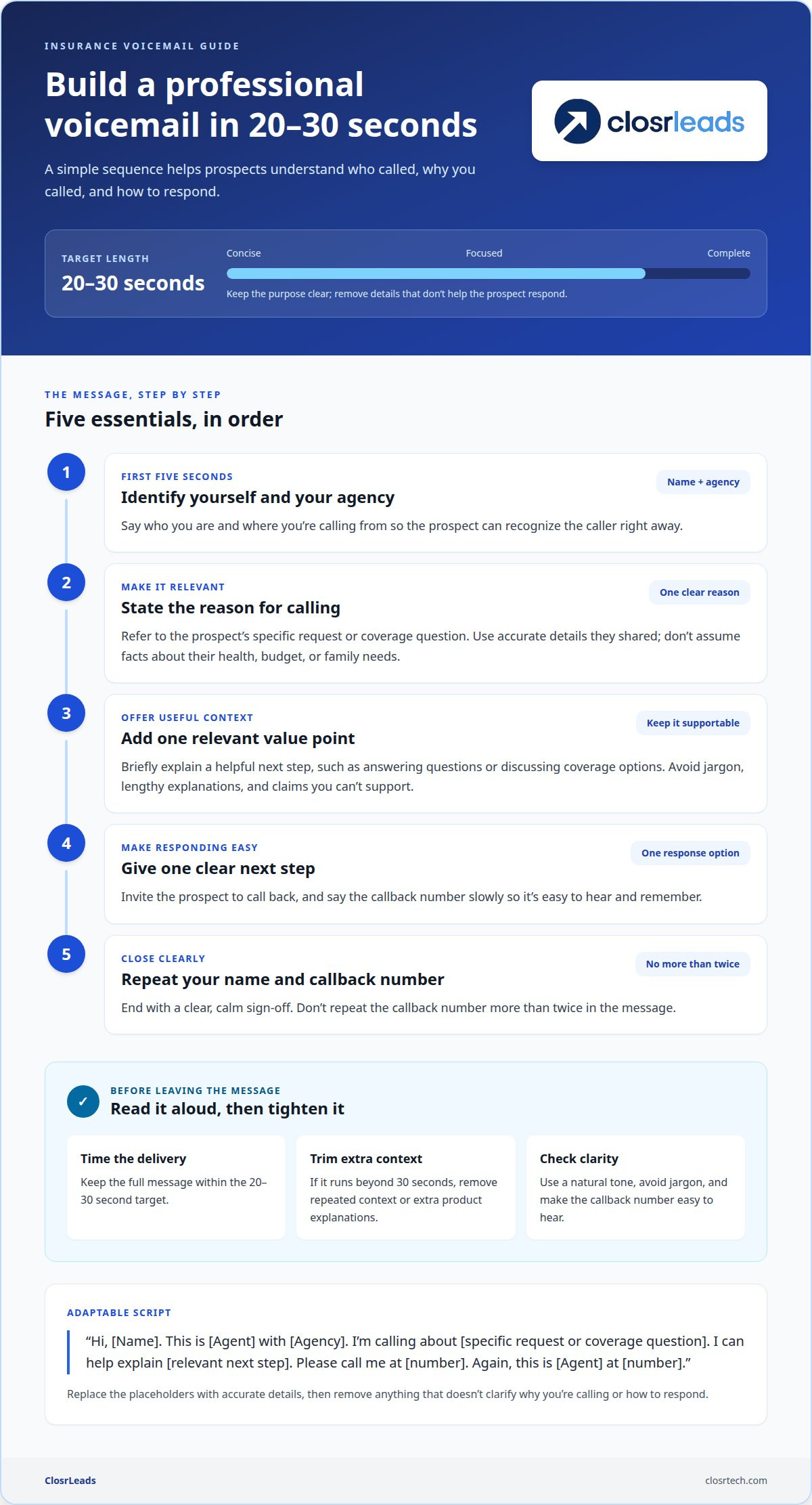
An effective insurance voicemail identifies the agent and agency, explains the reason for calling, and offers one clear next step. Add a relevant benefit, then state the callback number slowly. The prospect should recognize who called and understand how to continue the conversation.
Aim for 20 to 30 seconds. That gives agents time to deliver the essentials without burying the call’s purpose. Identify yourself and your agency within the first five seconds. Then state the reason, offer a brief value point, and invite a response. Avoid jargon, lengthy explanations, and several competing requests.
Use this structure: “Hi, [Name]. This is [Agent] with [Agency]. I’m calling about [specific request or coverage question]. I can help explain [relevant next step]. Please call me at [number]. Again, this is [Agent] at [number].” This identifies the caller, gives a reason for the call, and makes it easy for the prospect to respond.
Make every detail count. Replace “[specific request]” with the prospect’s actual inquiry, such as a request to discuss life coverage. Don’t add a benefit you can’t support or imply you’ve reviewed personal details they never shared. One accurate value point is stronger than broad claims about savings or approval.
Before leaving the message, read it aloud and time the delivery. If it runs beyond 30 seconds, remove repeated context or extra product explanations. Keep the callback number easy to hear, and don’t repeat it more than twice. A calm pace, natural tone, and clear ending help the agency sound professional rather than scripted.
Before calling, check whether the message answers three questions: who is calling, why now, and what should the prospect do next? If any answer is unclear, revise that line.
4. Final-call voicemail scripts
A final-call voicemail should close the loop, not manufacture urgency. Say that you’re making one last follow-up about the prospect’s earlier inquiry. Offer a clear next step, such as returning your call or letting you know they’re no longer interested. Keep the tone professional and leave room for the prospect to decide.
Try this script: “Hi, [Name]. This is [Agent] with [Agency]. I’m following up once more about the [coverage type] information you wanted. If you’d still like to discuss it, call me at [number]. If your plans have changed, that’s completely fine. Again, this is [Agent] at [number].” It names the topic and gives the prospect two simple ways to respond.
Adjust the close to the situation. For an unanswered quote request, mention the requested quote and invite a callback to discuss questions. For an older inquiry, ask whether the prospect still wants information. Refer to an upcoming renewal only when the timing is accurate. Each message should reflect the prospect’s actual circumstances.
Avoid language that sounds like a threat or creates a false deadline. Don’t say an offer expires or coverage will disappear unless that statement is accurate and relevant. A respectful final message protects trust, even if the prospect doesn’t respond. Focus on clarity, not pressure.
After leaving a message, record the date, reason for calling, and any response in your tracking system. That record helps prevent duplicate follow-up on the same inquiry. If the prospect returns your call, use the context you recorded to continue the conversation rather than asking them to repeat everything.
Keep the final-call script distinct from earlier messages. If previous calls focused on details, make this one about whether the prospect wants to continue or pause. Acknowledge a requested callback time only when you’re following that request. One direct message makes the next step clear.
For agents working final expense inquiries, explore Final Expense Leads as a source of prospects to follow up with.
ClosrLeads
ClosrLeads helps insurance agents put voicemail guidance into practice with insurance leads and a built-in dialer. For outreach focused on a specific audience, choose from Final Expense Leads, Veteran Insurance Leads, and IUL Leads.
Every lead is OTP phone-verified. Leads are delivered the moment they come in to your CRM via webhook or CSV, and the built-in dialer supports follow-up. This connects lead delivery and calling while you use concise, personalized messages and clear next steps. Your script still sets the tone: explain why you’re calling, make it easy to call back, and respect the prospect’s preferences.
If you’re ready to support your outreach with insurance leads and dialing tools, contact ClosrLeads to discuss your needs.
Make Your Next Follow-Up Count
Make voicemail a consistent part of your sales routine. Refine each message around the prospect’s actual inquiry and give them a clear, straightforward next step. Strong voicemail scripts for insurance leads support focused conversations when they sound relevant, professional, and personal.
When you’re ready to build your outreach around the right prospects, ClosrLeads offers Final Expense Leads, Veteran Insurance Leads, and IUL Leads. Choose the audience that fits your focus, then use a consistent follow-up process to put your messages to work.
Contact ClosrLeads today to discuss your lead needs and take the next step toward a more focused outreach strategy. Keep your message clear, your follow-up purposeful, and your momentum moving forward.
Frequently Asked Questions
What are some good voicemail ideas for insurance agents?
Choose a message that fits the reason for the call, such as a quote request, renewal discussion, or missed appointment. For a missed appointment, say, “I’m following up about the time we planned to connect. Call me if you’d like to reschedule.” One relevant detail makes the message feel intentional. Avoid adding personal information the prospect didn’t provide.
How soon should I follow up after leaving a voicemail?
Plan your next follow-up within 24 hours of the first call, while the inquiry is still relevant. A text sent 5 to 15 minutes after the voicemail can offer another response channel, provided the prospect’s consent and preferences allow it. Keep any follow-up brief, identify yourself, and make its purpose consistent with the voicemail.
What are some catchy phrases for selling insurance in a voicemail?
Use clear, benefit-focused phrases instead of hype. Try, “Let’s make your coverage questions easier to answer,” or, “I can help you understand the options you asked about.” These lines invite a conversation without promising a particular result. Tie the phrase to the prospect’s inquiry, and avoid claims about savings, approval, or protection unless they’re accurate for that person.
What is a good script for a professional voicemail?
For a prospect who requested a callback, try: “Hi, [Name]. This is [Agent] from [Agency]. I’m returning your call about [topic]. I’m available to answer your questions. You can reach me at [number]. Again, this is [Agent] at [number].” This acknowledges the prospect’s action, provides context, and makes it easy to call back.
How long should an insurance lead voicemail be, and what should it include?
Aim for 20 to 30 seconds, with enough time for your name, agency, reason for calling, and a clear callback option. Leave out extra product details that belong in a conversation. If your message runs long, remove repeated context first. Say the number at a steady pace so the prospect can note it without replaying the recording.
What voicemail tactics should insurance agents avoid to stay compliant and build trust?
Avoid false deadlines, unsupported savings claims, misleading caller identification, and repeated messages after someone asks you to stop. In the United States, the Federal Communications Commission says outbound insurance calls are governed by the TCPA, the National Do Not Call Registry, and state-specific regulations. Prerecorded messages can involve additional consent requirements, so use them only in line with applicable rules.